
A Glaze Through Time: A 300-Year Ceramic Dialogue
The Form of Nobility
The dome-shaped lid traces back to 17th-century European spice containers, while the full-bodied curves reflect the Chinese-inspired porcelain jars displayed in the Hall of Mirrors at Versailles under Louis XIV. This vase embodies a rich history of Eastern artifacts transformed into aristocratic Western decor—aesthetic fossils from the trade corridors linking two worlds.
The Cross-Cultural Journey of Blue
The hand-painted cobalt blue vines are more than revival art—they follow the legacy of Dutch Delftware, blending Persian miniature motifs with Mediterranean grape patterns. Each brushstroke revives the rhythm of 18th-century porcelain masters, with layered glaze revealing lapis lazuli-like texture, while the gilded top engages in a radiant dialogue between the sacred and the luxurious.
Dual Harmony of Beauty and Function
Fired three times in the kiln, the robust ceramic walls can support the weight of hydrated hydrangeas or stand as an eternal sculpture for dried arrangements in an entryway. The golden neck band not only revives the gilding traditions of Vienna porcelain workshops but also offers a precise grip—turning daily flower arranging into a ritual of touchable elegance.
The Magic of Glazed Light in Space
As morning light traces the blue patterns, it casts shadows reminiscent of Delft church stained glass; by candlelight, the gilded lines glow, reviving the opulent moments of Rococo salon display cabinets. Whether placed as a vintage ceramic jar beside a bookshelf or an artistic vase above a fireplace, it tells—through its glaze—the story of aesthetic fusion from the Age of Exploration.
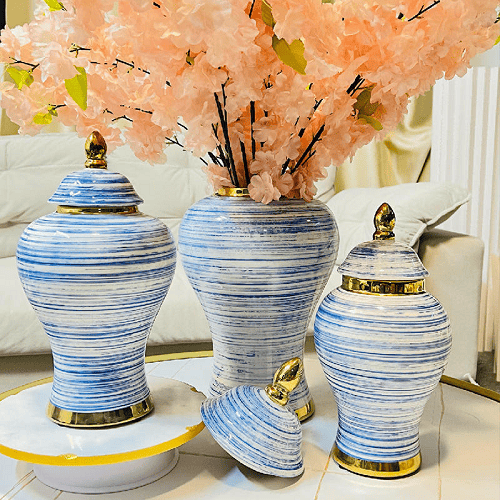
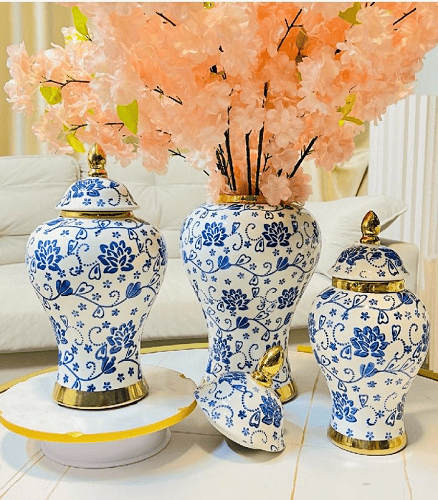
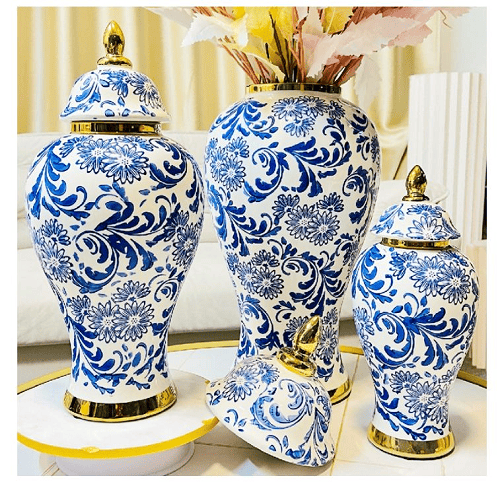
detailed information
| Model | SP- YIJIA |
| Material | ceramics |
| Size | 27*27*60CM 21*21*45CM 16*16*35CM 16*16*30CM |
| Color | Blue and White |
| For | Home decoration, Gifts, Hotel decoration |